
How Do Recruitment Agencies Work? (A Complete Guide With Benefits)
Looking for a new job can feel overwhelming. Endless applications, little feedback, and fierce competition can quickly drain your motivation. That’s where recruitment agencies come in. For many job seekers across the UK and beyond, recruitment agencies act as a bridge between talent and opportunity — often opening doors to roles that never even make it onto public job boards.
Whether you’re a graduate, an experienced professional, or someone exploring a career change, understanding how recruitment agencies work can significantly improve your chances of landing the right job faster. In this comprehensive guide, we’ll explain what recruitment agencies are, how they work step by step, their benefits, and how to use them effectively to boost your job search.
What Is a Recruitment Agency?
A recruitment agency is a professional organisation that helps employers find suitable candidates to fill job vacancies. At the same time, it supports job seekers by matching them with roles that fit their skills, experience, and career goals.
In the UK, recruitment agencies are widely used across industries such as finance, healthcare, construction, IT, engineering, education, retail, and administration. Employers rely on agencies to save time, reduce hiring risks, and access a wider pool of qualified candidates.
From a candidate’s perspective, recruitment agencies often provide:
- Access to exclusive or unadvertised roles
- CV and interview support
- Industry insights and salary guidance
- Ongoing job opportunities without repeated applications
Most recruiters earn a commission when a company successfully hires a candidate they’ve introduced, which means their success is directly linked to yours.
Types of Recruitment Agencies
Before working with an agency, it’s useful to understand the different types available:
1. General Recruitment Agencies
These agencies recruit across multiple sectors and roles. They’re ideal if you’re open to various opportunities or early in your career.
2. Specialist Recruitment Agencies
Specialist agencies focus on a specific industry such as IT, healthcare, engineering, or finance. If you work in a niche field, a specialist recruiter often has better employer connections and deeper industry knowledge.
3. Temporary and Contract Agencies
These agencies place candidates in short-term, temporary, or contract roles. They are popular in sectors like administration, warehousing, construction, and healthcare.
4. Executive Search Agencies
Also known as headhunters, these agencies recruit senior or leadership roles and typically approach candidates directly rather than advertising publicly.
How Do Recruitment Agencies Work? (Step-by-Step Guide)
Understanding the recruitment process helps you work more effectively with an agency and avoid common mistakes.
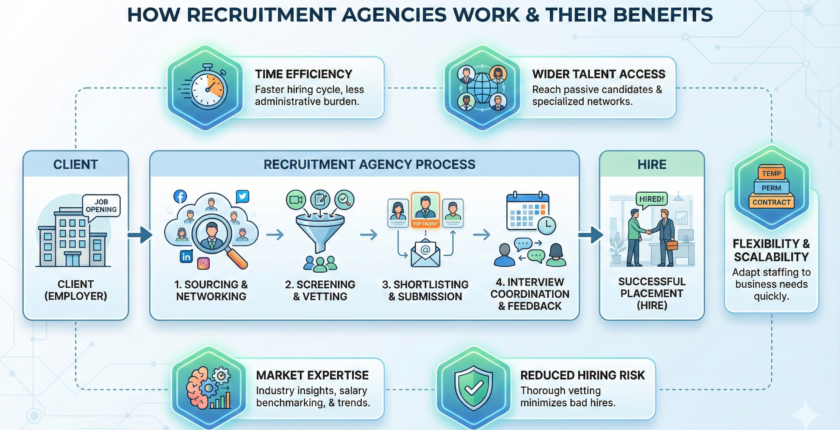
1. Initial Contact and Candidate Screening
The process usually starts when you register with a recruitment agency, either online or in person. A recruiter may invite you for an initial consultation, which can be face-to-face, over the phone, or via video call.
During this stage, they typically:
- Review your CV and work history
- Ask about your skills, qualifications, and experience
- Discuss your career goals, salary expectations, and availability
- Clarify what type of roles you’re interested in
This screening helps the recruiter assess where you best fit in the job market.
2. Entry Onto the Agency Database
Once registered, your CV is stored in the agency’s candidate database. Recruiters actively search this database when new vacancies come in from employers.
Being in the database means:
- You may be contacted about suitable roles without applying
- Your profile can be matched against multiple opportunities
- Recruiters can quickly put you forward for urgent vacancies
Keeping your CV updated is essential to maximise visibility.
3. New Job Opportunities Become Available
When an employer contacts the agency with a vacancy, recruiters:
- Review the job requirements
- Advertise the role online (if needed)
- Search their existing candidate database
If your profile matches, the recruiter contacts you with full details about the role, including responsibilities, salary range, location, and company background.
You decide whether you want to proceed — nothing is submitted without your consent.
4. Application and Shortlisting
If you’re interested, the recruiter submits your CV to the employer, often with a tailored profile highlighting why you’re a strong fit.
Recruiters may:
- Help tailor your CV to the role
- Request a cover letter
- Prepare you for employer expectations
The employer then reviews shortlisted candidates and decides who to interview.
5. Interview Coordination and Preparation
Recruitment agencies typically manage the interview process by:
- Scheduling interviews
- Providing interview tips and insights
- Sharing information about the company culture and interview style
This insider knowledge can give you a strong advantage over direct applicants.
6. Feedback, Offers, and Negotiation
After interviews, recruiters gather feedback from the employer and share it with you — even if you’re unsuccessful. If you receive a job offer, recruiters often help negotiate:
- Salary
- Benefits
- Start date
Their goal is to secure the best possible outcome for both you and the employer.
7. Recruitment Agency Costs (Who Pays?)
For job seekers, recruitment agencies are usually free. In the UK, agencies are paid by employers, not candidates.
Employers typically pay:
- A percentage of the hired candidate’s salary (for permanent roles)
- A margin on hourly rates (for temporary or contract roles)
Be cautious of any agency that asks for upfront payment to secure a job — this is uncommon and often a red flag.
Benefits of Working With a Recruitment Agency
Working with a recruitment agency offers numerous advantages, especially in competitive job markets.
1. Access to Hidden Job Opportunities
Many employers never advertise roles publicly. Agencies often fill vacancies confidentially, giving you access to unlisted positions.
2. Expert CV and Cover Letter Advice
Recruiters know what employers want. Their feedback can dramatically improve how your CV performs.
3. Interview Coaching and Preparation
From common questions to company-specific insights, recruiters help you walk into interviews confident and prepared.
4. Time-Saving Job Search
Instead of applying for dozens of roles, recruiters do the matching work for you.
5. Constructive Feedback
Even after unsuccessful interviews, recruiters often provide valuable feedback that helps you improve.
6. Industry and Salary Insights
Recruiters understand market trends, salary benchmarks, and employer expectations — especially useful in specialist sectors.
7. Greater Employer Credibility
Being submitted by a reputable recruiter can boost your credibility with employers.
How Do You Apply for Jobs Through Recruitment Agencies?
In many cases, you don’t apply in the traditional sense. Instead:
- Recruiters contact you about roles
- You confirm interest
- They submit your application on your behalf
You can also:
- Apply directly to agency-advertised roles
- Register on their website
- Inform recruiters about jobs you’ve seen and want to pursue
To stay active, keep your recruiter updated about:
- Availability
- Role preferences
- Changes to your CV or experience
How to Use a Recruitment Agency Effectively
1. Research the Right Agencies
Choose agencies with strong reviews, relevant specialisms, and a good reputation in your industry.
2. Be Honest and Clear
Clearly communicate your skills, salary expectations, and career goals. Transparency leads to better matches.
3. Stay in Regular Contact
If you haven’t heard back in a week or two, follow up. Polite persistence keeps you top of mind.
4. Be Professional and Responsive
Quick replies and flexibility make recruiters more likely to prioritise you.
5. Attend Interviews You’re Genuinely Interested In
Each interview builds experience and confidence — but only pursue roles that align with your goals.
Recruitment agencies play a powerful role in today’s job market. When used correctly, they can reduce stress, save time, and significantly improve your chances of securing the right role. By understanding how recruitment agencies work and building strong relationships with recruiters, you position yourself as a serious, prepared, and employable candidate.
Whether you’re actively job hunting or simply exploring options, partnering with a recruitment agency could be one of the smartest career moves you make.